
Call us now :08045811849
 Send Inquiry
 Send Inquiry
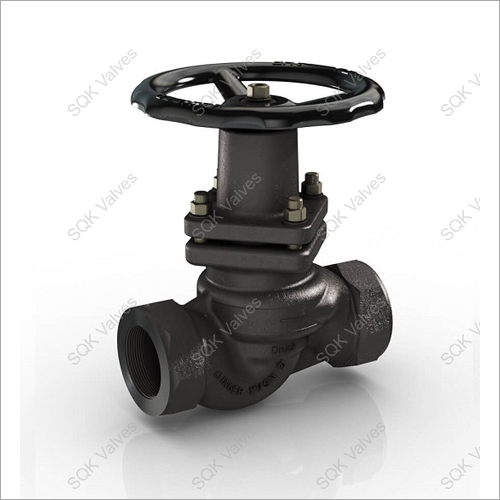
A182 F304L Stainless Steel Piston Valve
MOQ : 5 Units
A182 F304L Stainless Steel Piston Valve Specification
- Structure
- Piston Valve
- Material
- A182 F304L Stainless Steel
- Power
- Manual
- Pressure
- ANSI Class 150 / PN16
- Media
- Steam, Gas, Water
- Working Temperature
- -20C to 220C
- Port Size
- 1/2 inch to 2 inch
- Surface
- Polished
- Shape
- Straight/Angular
- Application
- Steam, Gas, Water, Chemical Industries
- Body Material
- Stainless Steel 304L
- Connection Type
- Flanged, Screwed, Socket Weld
- Handle Type
- Handwheel
- Corrosion Resistance
- High
- Operating Type
- Linear Motion
- Testing Standard
- API 598
- Leakage Class
- Class VI
- Seal Type
- Graphite/PTFE Seals
- End Connection
- BS, ANSI, DIN Standards
- Stem Material
- Stainless Steel
A182 F304L Stainless Steel Piston Valve Trade Information
- Minimum Order Quantity
- 5 Units
- Supply Ability
- 200 Units Per Month
- Delivery Time
- 7 Days
About A182 F304L Stainless Steel Piston Valve
A182 F304L Stainless Steel Piston Valve
Full port forged steel isolation valves with a maximum operating pressure of 1973 psig/136 Barg and a maximum operating temperature of 800oF/427oC. The burnished piston and metal reinforced graphite rings provide leak-proof shut off and allow Piston Valves to be operated at higher temperatures, while also extending operating life.
Piston Valves are available in Socket Weld, BSPT, and NPT end connections. Flanged ends can be supplied upon request. Piston Valves are ideal for saturated and superheated steam, and hot water applications.
Piston Valves Feature :
- Leak-proof isolation
- Sizes from 1/2"/15mm to 1-1/2"/40mm
- Choice of socket weld or threaded connections
- Compatible with ASME
- Resistant to cavitation
- All sealing valve components may be easily replaced in-line
- Long-term operation. Piston valve design ensures actuation even after many years without operation
- Fire-proof performance
Design Standards :
- ASME (B16.34, B16.5)
- Inspection and testing (API 598)
- Leak test (ANSI/FCI 70-2 )
- Fire test (API SPEC 6FA : 1999
Design features of Piston Valves :
Materials of Construction
- Body and Bonnet ASTM A105N / A350 LF2 Forged Steel
- Spindle SS T304
- Ring Valve SS T3016 + Graphite
- Piston SS 17-4 PH
- Spacer CA 40
- Belleville Washer ASTM A231
- Name Plate SS 304
Versatile Connection Options
This piston valve accommodates multiple end connections-flanged, screwed, and socket weld-making it highly adaptable to various pipelines and installation requirements. Supporting BS, ANSI, and DIN standards, users can integrate it within existing infrastructure across diverse industrial settings.
Durable Stainless Steel Construction
Built from A182 F304L stainless steel, both the body and stem offer excellent corrosion resistance. This robust construction ensures reliable performance in aggressive environments found in chemical, water, gas, and steam applications, optimizing operational safety and longevity.
Leak-Tight Sealing Mechanism
Utilizing graphite or PTFE seals, the valve meets rigorous Class VI leakage standards according to API 598 testing. The structure guarantees minimal leakage and consistent operation even under high-pressure and temperature conditions, enhancing system integrity.
FAQ's of A182 F304L Stainless Steel Piston Valve:
Q: How does the A182 F304L Stainless Steel Piston Valve maintain leak-tight performance?
A: The valve uses graphite or PTFE seals and is tested per API 598 standards to Class VI leakage compliance, ensuring minimal leakage and reliable operation under diverse industrial conditions.Q: What applications are most suitable for this piston valve?
A: This valve is ideal for managing steam, gas, water, and chemicals, making it widely used in process, utility, and distribution lines within chemical, water treatment, and gas industries.Q: When should a flanged, screwed, or socket weld connection type be chosen?
A: Flanged connections are recommended for ease of maintenance and high-pressure systems, screwed for compact installations, and socket weld for secure, leak-proof piping in demanding environments.Q: Where can the A182 F304L Piston Valve be used geographically?
A: This valve is manufactured, distributed, and exported in India and can be integrated into industrial systems globally, thanks to compliance with international standards (BS, ANSI, DIN).Q: What benefits does the stainless steel 304L body provide?
A: Stainless steel 304L endows the valve with superior corrosion resistance, structural integrity, and suitability for harsh and corrosive atmospheres, prolonging service life and reducing maintenance.Q: How is the valve operated and adjusted?
A: Operation is manual via a handwheel that controls the linear motion, enabling precise flow regulation and easy adjustment for maintenance or system balancing.Q: What is the standard process for valve testing before shipment?
A: Each valve undergoes stringent API 598 testing, verifying its pressure resistance, leak-class compliance, and adaptability for steam, gas, water, and chemical media before delivery.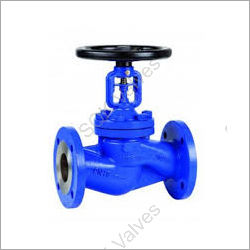
Tell us about your requirement

Price:
Quantity
Select Unit
- 50
- 100
- 200
- 250
- 500
- 1000+
Additional detail
Mobile number
Email

More Products in Piston Valves By Materials Category
SQK A105 Forged Carbon Steel Piston Valve
Price Range 5000.00 - 30000.00 INR / Unit
Minimum Order Quantity : 5 Units
Power : Manual
Shape : Straight Pattern
Port Size : 1/2 inch to 2 inch
Material : Other, Forged Carbon Steel ASTM A105
SQK A182 F316L Stainless Steel Piston Valve
Price Range 5000.00 - 30000.00 INR / Unit
Minimum Order Quantity : 5 Units
Power : Manual
Shape : Straight / Cylindrical
Port Size : 1/2 inch to 8 inch
Material : Other, A182 F316L Stainless Steel
A182 FSS304 Stainless Steel Piston Valve
Price Range 5000.00 - 30000.00 INR / Unit
Minimum Order Quantity : 5 Units
Power : Manual
Shape : Straight
Port Size : 15mm to 100mm
Material : Other, A182 FSS304 Stainless Steel
A216 WCC Cast Carbon Steel Piston Valve
Price Range 5000.00 - 30000.00 INR / Unit
Minimum Order Quantity : 5 Units
Power : Manual
Shape : Straight (Inline)
Port Size : 1/2 inch to 12 inch
Material : Other, A216 WCC Cast Carbon Steel

 Send Inquiry
Our Products
- Globe Valve
- Globe Valve By Construction
- Globe Valve By End Connection
- Globe Valves By Design
- Globe Valves By Materials
- Globe Valves
- Plug Valves
- Plug Valves By Construction
- Plug Valves By End Connection
- Plug Valve By Design
- Plug Valves By Materials
- Plug Valve By Class
- Ball Valve
- Ball Valves
- Ball Valves By End Connection
- Ball Valves
- Ball Valves By Material
- Ball Valve By Class - Pressure Rating
- Gate Valve
- Gate Valves By Construction
- Gate Valves By End Connection
- Gate Valves By Design
- Gate Valves By Materials
- Gate Valves By Class
- Piston Valve
- Check Valve
- Swing Check Valves By Construction
- Swing Check Valves By End Connection
- Swing Check Valves By Design
- Swing Check Valves By Materials
- Swing Check Valves By Class
- Piston Valves By Construction
- Piston Valves By End Connection
- Piston Valve By Design
- Piston Valves By Materials
- Piston Valve By Class


Plot No. 46 & 49, Survey No. 62/1, Behind New Ekta Weighing Bridge, Panvel Road, Dahisar Mori, near Taloja MIDC,Navi Mumbai - 400612, Maharashtra, India

Mr Saquib Khan
(Director )
Mobile :08045811849
 Send Inquiry
 Send SMS
Developed and Managed by Infocom Network Private Limited.
 English
 Spanish
 French
 German
 Italian
 Chinese (Simplified)
 Japanese
 Korean
 Arabic
 Portuguese