
Call us now :08045811849
 Send Inquiry
 Send Inquiry
SQK A352 LCC Carbon Steel Swing Check Valve
MOQ : 5 Units
SQK A352 LCC Carbon Steel Swing Check Valve Specification
- Structure
- Swing Check
- Material
- A352 LCC Carbon Steel
- Power
- Manual
- Pressure
- 150LB / 300LB (Class Rated)
- Media
- Water, Oil, Gas
- Working Temperature
- -29C to 425C
- Port Size
- 2 to 24 (DN50-DN600)
- Surface
- Anti-corrosive Painted
- Shape
- Swing Type
- Application
- Oil & Gas, Petroleum, Chemical Industry, Waterworks
- Cover Material
- Carbon Steel
- End Connection
- Flanged / Butt Weld
- Testing Standard
- API 598
- Installation Orientation
- Horizontal
- Standard
- API 6D/ASME B16.34
- Body Material
- ASTM A352 LCC
- Seat Material
- Metal / Soft Seat
- Body Design
- Full Bore
- Face to Face
- ASME B16.10
- Disc Material
- Carbon Steel
- Working Medium
- Water, Oil, Steam, Chemical
- Operation Type
- Swing
SQK A352 LCC Carbon Steel Swing Check Valve Trade Information
- Minimum Order Quantity
- 5 Units
- Supply Ability
- 200 Units Per Month
- Delivery Time
- 7 Days
About SQK A352 LCC Carbon Steel Swing Check Valve
SQK A352 LCC Carbon Steel Swing Check Valve
The API BS 1868 series of Swing Check Valves is exceptionally sturdy, rugged and durable, with a reputation for quality, integrity, and long service.
They are designed for tight sealing and ease of operation. The valves are available flanged & butt-weld ends in pressure rating from ASME Class 150 to Class 2500, and in a variety of materials of construction.
Check Valves are of swing-type and bolted-cover construction. They conform to BS 1868 and also meet the general requirements of API 600, including shell wall thickness.
Main features :
- Bolted body-cover design, seal welded & Valves with pressure seal cover
- Bolted body-cover joints provided with spiral-wound stainless steel gasket and graphite filler for maximum protection against leaks
- Die-formed graphite inner packing rings and braided graphite end rings with Inconel wire reinforcement and corrosion inhibitor
- T-head stem-disc connection of gate valve fully meets strength requirements of API 602 and API 598
- Rolled ACME thread on the stem for smooth operation
- Tapered shoulder on the stem for back seating
- Self-aligning type gland assembly with stud-and-nut tightening
- Integral hard-faced body seat for globe and check valves
- Spring-loaded disc on check valves suitable for no horizontal applications too
- Gate and globe valves can be offered with electrical actuators
- Austenitic SS forging for body and bonnet of Cryogenic valves, resulting in excellent impact strength, minimal heat loss, and resistance to corrosion
- Valves can be offered to NACE MR-0175 and other special NACE requirements
Cast steel ASME B16.34 Swing Check Valves Pressure Seal Bonnet design
The ASME B16.34 Swing Check, and Y Type Swing Check Valves feature a pressure seal bonnet design for high-pressure services. These valves are extensively used in high pressure and high-temperature steam, oil, gas, chemical, and water applications in thermal power plants, fertilizer plants, petrochemical plants, and refineries. These valves are available in butt weld ends in pressure ratings of Classes 900, 1500 and 2500, and come in carbon steel and alloy steel construction.
Superior Material Quality
Crafted from ASTM A352 LCC carbon steel, this swing check valve exhibits excellent toughness and resistance to low-temperature impacts. Anti-corrosive surface painting ensures longevity, even in aggressive operating environments, while the use of premium carbon steel components enhances structural integrity and operational dependability.
Compliance with International Standards
The SQK A352 LCC Swing Check Valve adheres to global standards, including API 6D, ASME B16.34, and face-to-face measurements per ASME B16.10. Rigorous API 598 testing certifies its performance and reliability, making it a trusted choice for critical applications in oil & gas, chemicals, and waterworks.
Versatile Applications and Installation
This valve supports a breadth of working mediawater, oil, steam, and chemicals. Its full bore design lowers pressure drop, while compatibility with both flanged and butt weld connections allows flexible installation in horizontal pipelines. Manual swing operation supports precise flow regulation in various industrial settings.
FAQs of SQK A352 LCC Carbon Steel Swing Check Valve:
Q: How is the SQK A352 LCC Carbon Steel Swing Check Valve installed?
A: The valve is designed for horizontal installation and supports both flanged and butt weld end connections. Proper alignment and secure bolting or welding are necessary to ensure leak-free service. Following installation guidelines in accordance with ASME and API standards is recommended.Q: What are the main benefits of using this swing check valve in industrial applications?
A: The SQK A352 LCC Swing Check Valve offers reliable backflow prevention, excellent corrosion resistance due to its anti-corrosive painting, and robustness under varying pressures and temperatures. Its full bore structure minimizes flow resistance, making it ideal for oil & gas, petrochemical, and waterworks environments.Q: When should I choose a soft seat versus a metal seat for the valve?
A: A soft seat provides superior sealing in low-pressure or clean media applications to minimize leakage. For high-temperature, abrasive, or corrosive applications, a metal seat is preferable due to its durability and resistance to wear.Q: Where can this check valve be applied effectively?
A: This valve is suitable for use in pipelines carrying water, oil, steam, or chemicals, commonly found in the oil & gas, petroleum, chemical processing, and waterworks sectors.Q: What is the recommended working temperature range for this valve?
A: The valve operates reliably between -29C and 425C, making it suitable for services ranging from chilled water to high-temperature steam and process fluids.Q: How does the swing check mechanism function?
A: The swing check design allows the disc to swing open as fluid flows in the correct direction, and close automatically to prevent reverse flow, protecting pumps and equipment downstream.
Tell us about your requirement

Price:
Quantity
Select Unit
- 50
- 100
- 200
- 250
- 500
- 1000+
Additional detail
Mobile number
Email

More Products in Swing Check Valves By Materials Category
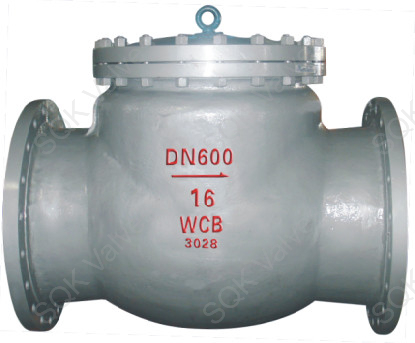
SQK A217 C5 Cast Alloy Steel Swing Check Valve
Price Range 5000.00 - 30000.00 INR / Unit
Minimum Order Quantity : 5 Units
Media : Other, Water, Oil, Gas
Surface : Other, Coated / Painted
Shape : Swing Type
Material : Other, A217 C5 Cast Alloy Steel
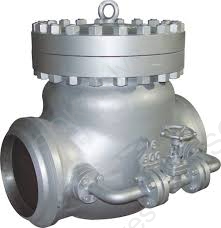
SQK A352 LCB Carbon Steel Check Valve
Price Range 5000.00 - 30000.00 INR / Unit
Minimum Order Quantity : 5 Units
Media : Other, Water, Oil, Gas
Surface : Other, Anticorrosive painted
Shape : Swing Type
Material : Other, A352 LCB Carbon Steel
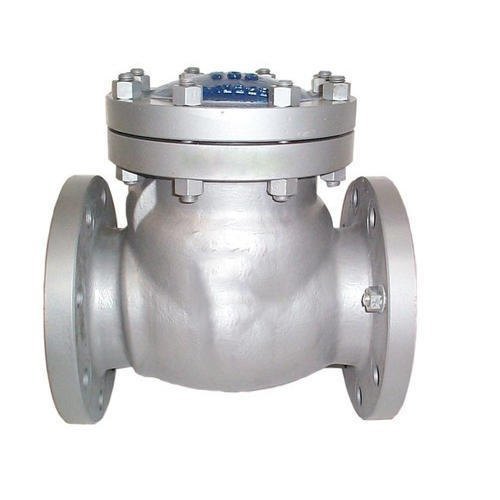
SQK A182 F321H Stainless Steel Swing Check Valve
Price Range 5000.00 - 30000.00 INR / Unit
Minimum Order Quantity : 5 Units
Media : Other, Water, Oil, Gas
Surface : Other, Anticorrosive, Shot Blasted Finish
Shape : Swing Type
Material : Other, A182 F321H Stainless Steel
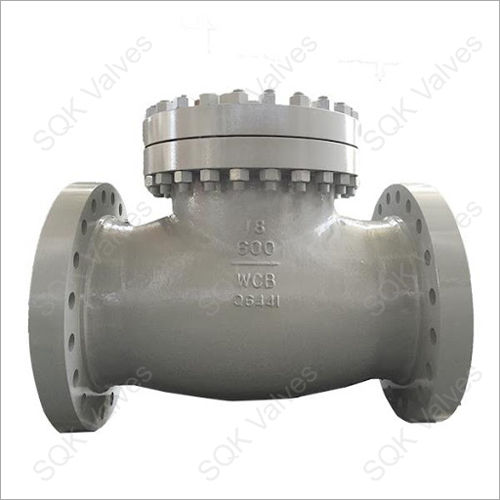
A217 WC6 Cast Alloy Steel Swing Check Valve
Price Range 5000.00 - 30000.00 INR / Unit
Minimum Order Quantity : 5 Units
Media : Other, Water, Oil, Gas
Surface : Other, Anticorrosive Painted
Shape : Swing Type
Material : Other, A217 WC6 Cast Alloy Steel

 Send Inquiry
Our Products
- Globe Valve
- Globe Valve By Construction
- Globe Valve By End Connection
- Globe Valves By Design
- Globe Valves By Materials
- Globe Valves
- Plug Valves
- Plug Valves By Construction
- Plug Valves By End Connection
- Plug Valve By Design
- Plug Valves By Materials
- Plug Valve By Class
- Ball Valve
- Ball Valves
- Ball Valves By End Connection
- Ball Valves
- Ball Valves By Material
- Ball Valve By Class - Pressure Rating
- Gate Valve
- Gate Valves By Construction
- Gate Valves By End Connection
- Gate Valves By Design
- Gate Valves By Materials
- Gate Valves By Class
- Piston Valve
- Check Valve
- Swing Check Valves By Construction
- Swing Check Valves By End Connection
- Swing Check Valves By Design
- Swing Check Valves By Materials
- Swing Check Valves By Class
- Piston Valves By Construction
- Piston Valves By End Connection
- Piston Valve By Design
- Piston Valves By Materials
- Piston Valve By Class


Plot No. 46 & 49, Survey No. 62/1, Behind New Ekta Weighing Bridge, Panvel Road, Dahisar Mori, near Taloja MIDC,Navi Mumbai - 400612, Maharashtra, India

Mr Saquib Khan
(Director )
Mobile :08045811849
 Send Inquiry
 Send SMS
 Call Me Free
Developed and Managed by Infocom Network Private Limited.
 English
 Spanish
 French
 German
 Italian
 Chinese (Simplified)
 Japanese
 Korean
 Arabic
 Portuguese