
Call us now :08045811849
 Send Inquiry
 Send Inquiry
Socket Weld End Ball Valve
MOQ : 5 Units
Socket Weld End Ball Valve Specification
- Caliber
- Full Bore
- Pressure
- Class 150 / Class 300
- Channels
- 2 (Two-way)
- Connection
- Socket Weld End
- Structure
- Ball Valve
- Material
- Stainless Steel / Carbon Steel / Forged Steel
- Power
- Manual
- Media
- Water, Oil, Gas, Steam, Acid
- Temperature of Media
- -20C to 200C
- Port Size
- 1/2 to 4
- Flange
- No
- Finish
- Polished
- Application
- Industrial Pipelines, Chemical, Petrochemical, Oil & Gas
- Seat Material
- PTFE / RPTFE
- Body Material
- Forged
- Testing Standard
- API 598
- Anti-static Device
- Provided
- Face to Face Standard
- ASME B16.10
- Design Standard
- API 6D / ASME B16.34
- Blow-out Proof Stem
- Yes
- Operation
- Lever Operated
- Fire Safe Design
- Available
- End Connection Standard
- ASME B16.11 (Socket Weld)
Socket Weld End Ball Valve Trade Information
- Minimum Order Quantity
- 5 Units
- Supply Ability
- 200 Units Per Month
- Delivery Time
- 7 Days
About Socket Weld End Ball Valve
Socket Weld End Ball Valve
Size | 2" to 56" (50 mm to 1400 mm) |
ASME Class | Class 150 to 2500 |
Design Standard | API 6D |
Trunnion-mounted Ball Valve design complies to API 6D
Wide portfolio of Side-entry and Top-entry designs
Fugitive emissions
Soft and Metal seated valves complies to ISO 15848-1, Class AH and BH
Fire safe design - to API 607 and API 6FACE Marking
Meets requirements of Pressure Equipment Directive 2014/68/EU,
Pneumatic shell test conducted at 1.1 times rated pressure to check shell integrity, when required Double block and bleed (DBB) feature
Valves are designed and tested for automatic cavity relief
Anti-blowout stem design
Coil springs used for consistent seat loading and lower operating torque
Lip seals provided for low temperature services
Primary O ring and Secondary graphite (in 3 stage stem, thrust washer is primary)
Wide portfolio of Side-entry and Top-entry designs
Options: Buried service, Cryogenic
Offered with Electric, Pneumatic and Hydraulic Actuators
In-house Tests Capabilities
Superior Safety and Reliability
With advanced features such as a fire safe design, anti-static device, and blow-out proof stem, this ball valve ensures operational safety in demanding environments. Its compliance with prominent standards guarantees reliability and long service life for industrial, chemical, petrochemical, and oil & gas sectors.
Engineered for Versatile Application
Manufactured using forged body materials and PTFE/RPTFE seats, this valve is compatible with a range of aggressive media, including steam and acid. The socket weld end connection, compliant with ASME B16.11, simplifies installation in pipeline systems, providing leak-proof and durable service.
FAQ's of Socket Weld End Ball Valve:
Q: How does the socket weld end connection improve valve installation efficiency?
A: The socket weld end connection, conforming to ASME B16.11, allows for secure and leak-proof joining within pipeline systems. It streamlines the installation process by enabling direct welding to pipes, minimizing potential leakage and improving overall durability.Q: What safety features are included in the lever operated ball valve?
A: This valve incorporates a fire safe design, anti-static device, and a blow-out proof stem. These features collectively enhance the safety of operations, minimizing risk during exposure to hazardous environments and ensuring the stem remains secure during pressure fluctuations.Q: Where can this socket weld end ball valve be used?
A: It is suitable for a wide range of industrial applications, including chemical plants, petrochemical facilities, oil and gas refineries, and water pipeline systems. Its robust construction and versatile chemical resistance make it ideal for demanding process streams.Q: When should PTFE or RPTFE seat material be chosen for media handling?
A: PTFE or RPTFE seats are recommended when handling corrosive fluids such as acids, steam, or high-purity water, as they offer excellent chemical resistance and temperature stability within the operational range of -20C to 200C.Q: What is the process for testing this ball valve before shipment?
A: All valves are rigorously tested in accordance with API 598 standards to ensure their structural integrity, leak-tightness, and performance reliability before they are distributed to customers.Q: How does manual lever operation benefit pipeline maintenance?
A: Manual lever operation provides straightforward and rapid control over flow. It allows for easy maintenance, inspection, and quick shut-off capability, making it especially beneficial in systems requiring frequent operational adjustments.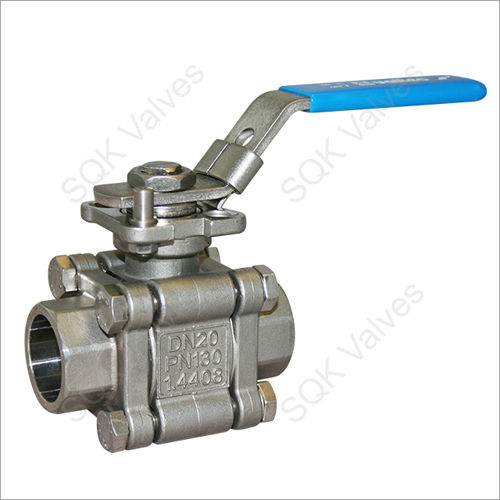
Tell us about your requirement

Price:
Quantity
Select Unit
- 50
- 100
- 200
- 250
- 500
- 1000+
Additional detail
Mobile number
Email

More Products in Ball Valves By End Connection Category
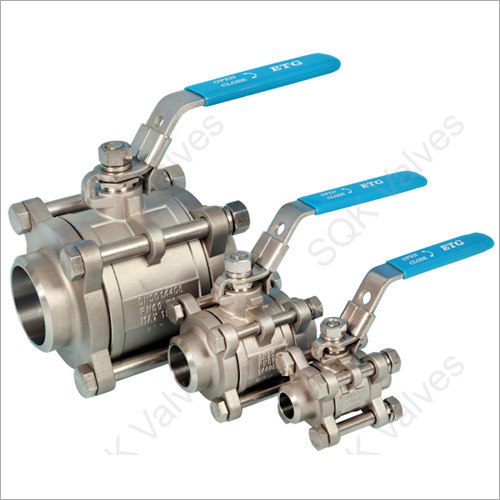
Buttweld End Ball Valve
Price Range 5000.00 - 30000.00 INR / Unit
Minimum Order Quantity : 5 Units
Power : Manual
Temperature of Media : 20C to 180C
Pressure : Other, Class 150 to Class 600
Port Size : 1/2 to 12
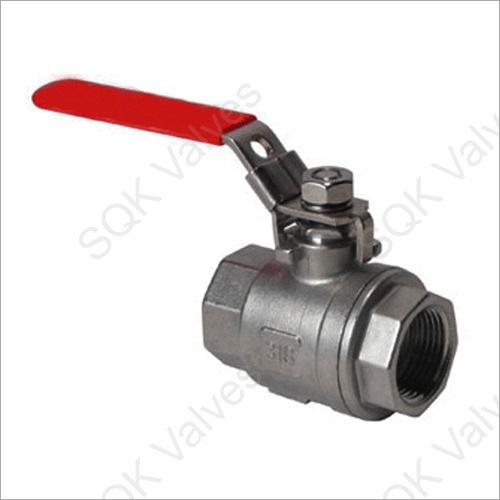
Screwed End Ball Valve
Price Range 5000.00 - 30000.00 INR / Unit
Minimum Order Quantity : 5 Units
Power : Manual
Temperature of Media : 20C to 180C
Pressure : Other, UP TO 1000 PSI
Port Size : 1/2 inch to 2 inch

 Send Inquiry
Our Products
- Globe Valve
- Globe Valve By Construction
- Globe Valve By End Connection
- Globe Valves By Design
- Globe Valves By Materials
- Globe Valves
- Plug Valves
- Plug Valves By Construction
- Plug Valves By End Connection
- Plug Valve By Design
- Plug Valves By Materials
- Plug Valve By Class
- Ball Valve
- Ball Valves
- Ball Valves By End Connection
- Ball Valves
- Ball Valves By Material
- Ball Valve By Class - Pressure Rating
- Gate Valve
- Gate Valves By Construction
- Gate Valves By End Connection
- Gate Valves By Design
- Gate Valves By Materials
- Gate Valves By Class
- Piston Valve
- Check Valve
- Swing Check Valves By Construction
- Swing Check Valves By End Connection
- Swing Check Valves By Design
- Swing Check Valves By Materials
- Swing Check Valves By Class
- Piston Valves By Construction
- Piston Valves By End Connection
- Piston Valve By Design
- Piston Valves By Materials
- Piston Valve By Class


Plot No. 46 & 49, Survey No. 62/1, Behind New Ekta Weighing Bridge, Panvel Road, Dahisar Mori, near Taloja MIDC,Navi Mumbai - 400612, Maharashtra, India

Mr Saquib Khan
(Director )
Mobile :08045811849
 Send Inquiry
 Send SMS
Developed and Managed by Infocom Network Private Limited.
 English
 Spanish
 French
 German
 Italian
 Chinese (Simplified)
 Japanese
 Korean
 Arabic
 Portuguese