
Call us now :08045811849
 Send Inquiry
 Send Inquiry
RTJ End Swing Check Valve
MOQ : 5 Units
RTJ End Swing Check Valve Specification
- Structure
- Swing Check
- Material
- Forged or Cast Steel
- Power
- Manual
- Pressure
- Class 150 to Class 2500
- Media
- Water, Oil, Gas
- Working Temperature
- -29C to 425C
- Port Size
- 2 to 36 (DN50 to DN900)
- Surface
- Anti-corrosive Painted or as per request
- Shape
- Swing Type
- Application
- Oil, Gas, Petrochemical, Power Plants, Water Works
- Face to Face
- ASME B16.10
- Body Material
- ASTM A216 WCB, ASTM A351 CF8, CF8M or Equivalent
- Disc Material
- Alloy Steel, Stainless Steel
- Testing
- Hydrostatic & Pneumatic per API 598
- Seal Type
- Metal-to-Metal/Soft Seated
- Operation
- Automatic with Flow, No External Power
- Standard
- API 6D, ASME B16.34
- Service
- Suitable for Severe Service Applications
- End Connection
- Ring Type Joint Flange
- Body Coating
- Epoxy or Custom Paint
- Connection Type
- RTJ (Ring Type Joint) End
- Flange Standard
- ASME B16.5 RTJ
- Seat Material
- SS or Hard-faced Alloy
- Design
- Non-return, Prevents Backflow
RTJ End Swing Check Valve Trade Information
- Minimum Order Quantity
- 5 Units
- Supply Ability
- 200 Units Per Month
- Delivery Time
- 7 Days
About RTJ End Swing Check Valve
RTJ End Swing Check Valve is used as essential part of water transferring pipelines. This type of valve is suitable for high/medium/normal temperature prone working condition. Port size of this valve ranges between 1/4 inch to 4 inch. Developed from stainless steel, this RTJ End Swing Check Valve features BSPT/NPT/BSPP threading. It comprises of standard accessories like bonnet gasket, swing type disc, bolted bonnet, eye bolt etc. Standard of this product has been tested on the basis of its longevity, surface finish and strength.
The API BS 1868 series of Swing Check Valves is exceptionally sturdy, rugged and durable, with a reputation for quality, integrity, and long service.
They are designed for tight sealing and ease of operation. The valves are available flanged & butt-weld ends in pressure rating from ASME Class 150 to Class 2500, and in a variety of materials of construction.
Check Valves are of swing-type and bolted-cover construction. They conform to BS 1868 and also meet the general requirements of API 600, including shell wall thickness.
Main features :
- Bolted body-cover design, seal welded & Valves with pressure seal cover
- Bolted body-cover joints provided with spiral-wound stainless steel gasket and graphite filler for maximum protection against leaks
- Die-formed graphite inner packing rings and braided graphite end rings with Inconel wire reinforcement and corrosion inhibitor
- T-head stem-disc connection of gate valve fully meets strength requirements of API 602 and API 598
- Rolled ACME thread on the stem for smooth operation
- Tapered shoulder on the stem for back seating
- Self-aligning type gland assembly with stud-and-nut tightening
- Integral hard-faced body seat for globe and check valves
- Spring-loaded disc on check valves suitable for no horizontal applications too
- Gate and globe valves can be offered with electrical actuators
- Austenitic SS forging for body and bonnet of Cryogenic valves, resulting in excellent impact strength, minimal heat loss, and resistance to corrosion
- Valves can be offered to NACE MR-0175 and other special NACE requirements
Cast steel ASME B16.34 Swing Check Valves Pressure Seal Bonnet design
The ASME B16.34 Swing Check, and Y Type Swing Check Valves feature a pressure seal bonnet design for high-pressure services. These valves are extensively used in high pressure and high-temperature steam, oil, gas, chemical, and water applications in thermal power plants, fertilizer plants, petrochemical plants, and refineries. These valves are available in butt weld ends in pressure ratings of Classes 900, 1500 and 2500, and come in carbon steel and alloy steel construction.
Robust Design for Demanding Applications
This RTJ End Swing Check Valve features a swing-type non-return mechanism to ensure fluid flows only in the intended direction. Its construction from forged or cast steel, with alloy or stainless steel disc and hard-faced seating options, ensures resilience and longevity even in severe service environments like oil, gas, and power plants.
Certified Performance and Reliable Operation
Conforming to API 6D, ASME B16.34, and API 598 standards, each valve undergoes rigorous hydrostatic and pneumatic testing before delivery. The design guarantees automatic operation using the system's flow pressure, requiring no manual intervention or external power sources. This results in reliable backflow prevention with minimal maintenance.
Flexible Installation and Versatile Application
With flanged RTJ ends as per ASME B16.5 and customizable surface coatings, the valve integrates seamlessly into various pipeline configurations. Available in sizes from DN50 to DN900 and pressure ratings from Class 150 to 2500, it accommodates a broad spectrum of operating conditions and media including water, oil, and gas.
FAQ's of RTJ End Swing Check Valve:
Q: How does the RTJ End Swing Check Valve prevent backflow in pipelines?
A: The swing check valve employs a disc that swings open to allow flow in one direction and automatically closes when flow reverses, thereby preventing backflow. This mechanism operates solely based on the pressure and movement of the media, ensuring reliable one-way flow without external controls.Q: What materials are used to manufacture the RTJ End Swing Check Valve and why?
A: The valve body is constructed from ASTM A216 WCB, CF8, CF8M, or equivalent, providing excellent mechanical strength and corrosion resistance. The disc is made from alloy or stainless steel for durability, while seat options include stainless steel or hard-faced alloy for enhanced wear resistance in severe service applications.Q: When should a metal-to-metal seat be used instead of a soft seat?
A: Metal-to-metal seats are recommended for high-temperature or abrasive service where soft materials may degrade, whereas soft seated options provide tighter sealing for lower-pressure or clean fluid applications. The choice depends on the process media, operating pressure, and temperature conditions.Q: Where are RTJ End Swing Check Valves typically installed?
A: These valves are commonly used in oil, gas, petrochemical plants, power generation facilities, and water works, particularly in pipelines where reliable prevention of backflow is critical. The RTJ flange connection ensures a secure seal in high-pressure environments.Q: What testing processes ensure the valve's integrity and performance?
A: Each valve is subjected to hydrostatic and pneumatic testing according to API 598 standards to verify pressure holding capability and leak-tightness before it is dispatched for installation. This guarantees the valve's safe and dependable operation in service.Q: How is the RTJ End Swing Check Valve installed and maintained?
A: Installation involves bolting the RTJ flanged ends to matching pipeline flanges as per ASME B16.5. Routine inspection is advised, but the valve requires minimal maintenance due to its automatic operation and durable construction. Surface coatings extend service life by resisting corrosion.Q: What are the main benefits of using this check valve in severe service applications?
A: The primary advantages include reliable backflow prevention, compatibility with aggressive media, minimal maintenance, high pressure and temperature endurance, and a choice of robust materials and coatings. These features make it ideal for demanding industrial processes in India and worldwide.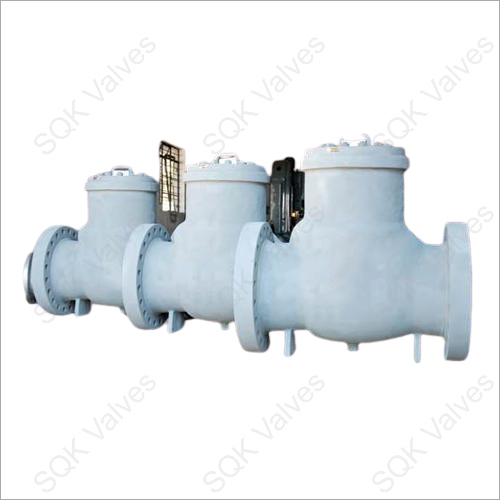
Tell us about your requirement

Price:
Quantity
Select Unit
- 50
- 100
- 200
- 250
- 500
- 1000+
Additional detail
Mobile number
Email

More Products in Swing Check Valves By End Connection Category
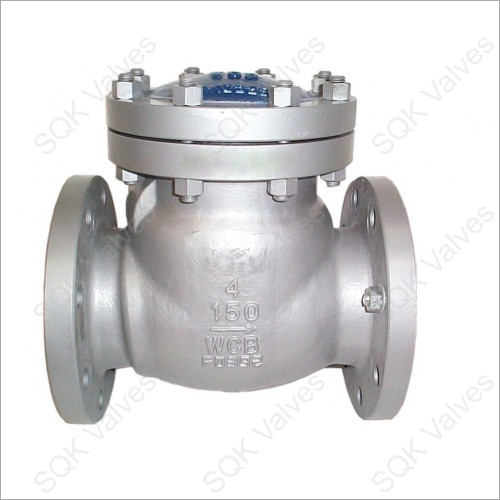
Flange End Swing Check Valve
Price Range 5000.00 - 30000.00 INR / Unit
Minimum Order Quantity : 5 Units
Application : Water, Oil, Gas, Steam pipelines
Working Temperature : Other, 10C to 200C
Material : Other, Cast Iron / Ductile Iron / WCB / SS304 / SS316
Surface : Other, Epoxy Painted / Shot Blasted / Painted
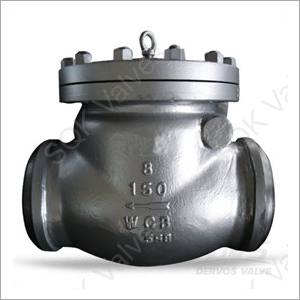
Buttweld End Swing Check Valve
Price Range 5000.00 - 30000.00 INR / Unit
Minimum Order Quantity : 5 Units
Application : Industrial Pipelines, Oil & Gas, Petrochemical
Working Temperature : Other, 29C to 425C
Material : Stainless Steel
Surface : Other, Polished / Shot Blasted
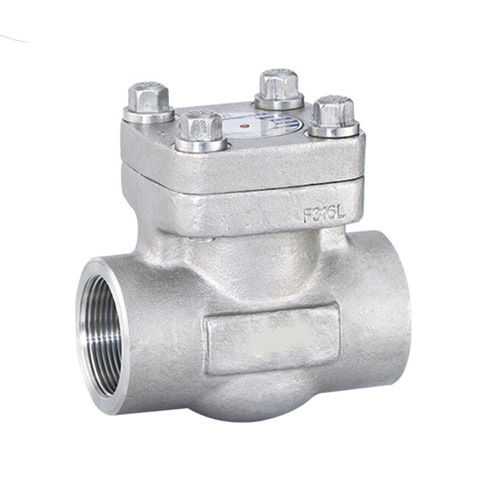
SQK Socket Weld Swing Check Valve
Price Range 5000.00 - 30000.00 INR / Unit
Minimum Order Quantity : 5 Units
Application : Industrial, Chemical, Oil & Gas
Working Temperature : Other, 10C to 150C
Material : Stainless Steel
Surface : Other, Polished

 Send Inquiry
Our Products
- Globe Valve
- Globe Valve By Construction
- Globe Valve By End Connection
- Globe Valves By Design
- Globe Valves By Materials
- Globe Valves
- Plug Valves
- Plug Valves By Construction
- Plug Valves By End Connection
- Plug Valve By Design
- Plug Valves By Materials
- Plug Valve By Class
- Ball Valve
- Ball Valves
- Ball Valves By End Connection
- Ball Valves
- Ball Valves By Material
- Ball Valve By Class - Pressure Rating
- Gate Valve
- Gate Valves By Construction
- Gate Valves By End Connection
- Gate Valves By Design
- Gate Valves By Materials
- Gate Valves By Class
- Piston Valve
- Check Valve
- Swing Check Valves By Construction
- Swing Check Valves By End Connection
- Swing Check Valves By Design
- Swing Check Valves By Materials
- Swing Check Valves By Class
- Piston Valves By Construction
- Piston Valves By End Connection
- Piston Valve By Design
- Piston Valves By Materials
- Piston Valve By Class


Plot No. 46 & 49, Survey No. 62/1, Behind New Ekta Weighing Bridge, Panvel Road, Dahisar Mori, near Taloja MIDC,Navi Mumbai - 400612, Maharashtra, India

Mr Saquib Khan
(Director )
Mobile :08045811849
 Send Inquiry
 Send SMS
 Call Me Free
Developed and Managed by Infocom Network Private Limited.
 English
 Spanish
 French
 German
 Italian
 Chinese (Simplified)
 Japanese
 Korean
 Arabic
 Portuguese