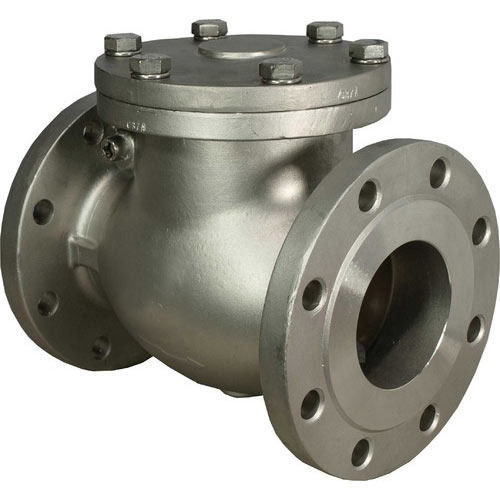
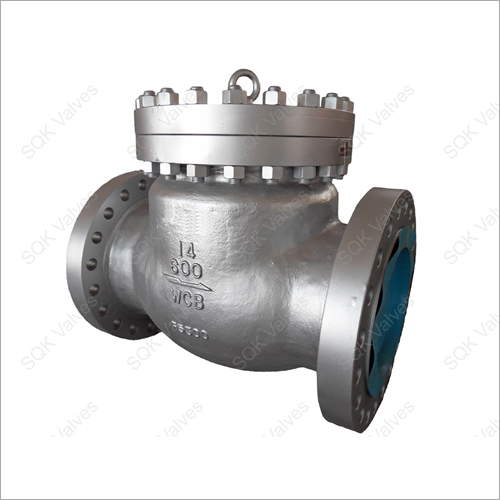
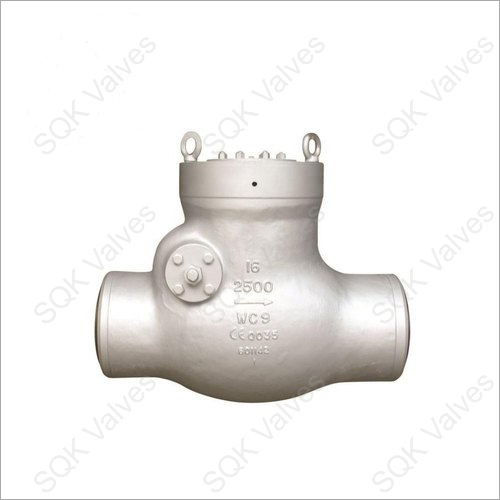
About Pressure Seal Bonnet Swing Check Valve
Pressure Seal Bonnet Swing Check Valve offered by us, is widely designed and manufactured by our skilled workers by making use of optimum grade of raw materials and latest technology. This is best suited for moderate velocity conditions. This valve is unidirectional and restrict flow from opposite direction. Our provided Pressure Seal Bonnet Swing Check Valve is normally designed for horizontal flow condition. This valve is easy to install as well as simple to operate. This valve requires very low maintenance and replacement costs.
- Size : 2 To 24(50MM To 600MM)
- Class/Pressure: #150 To #2500
- End Connection : Flange, Buttweld, Socket Weld , NPT, etc
- Design Standard : BS 1868, API 6D, etc
- Testing Standard : API 598, ASME B16.34, etc
- Body Material Steel: Cast Carbon Steel, Cast Alloy Steel, Cast Stainless Steel,
Special Material Also Available.
Engineered for Demanding ApplicationsThese swing check valves are constructed for critical operations in petrochemical, oil & gas, power plants, and refineries. Their pressure seal bonnet and high-quality trims ensure durability and long service life, even in harsh environments. With end connections in flanged and butt-weld types, installation is streamlined and reliable, allowing adaptability to various system designs.
Reliable Non-Return OperationThe swing check mechanism ensures efficient, automatic closure, preventing backflow without the need for manual intervention. Designed for compatibility with manual operation and a non-return function, this valve supports operational safety by automatically sealing when reverse flow occurs, thereby safeguarding pumps and equipment.
FAQs of Pressure Seal Bonnet Swing Check Valve:
Q: How does the pressure seal bonnet improve the performance of the swing check valve?
A: The pressure seal bonnet enhances the valves sealing capability under high-pressure conditions. As the line pressure increases, the bonnet seal becomes more effective, ensuring leak-tight integrity even at pressures up to Class 2500, which is crucial for demanding applications such as power plants and refineries.
Q: What materials are available for the trim and body of the valve, and how do I choose the right one?
A: Trim materials like Stellite, 13% Chromium, SS304, and SS316 are offered to provide superior corrosion and wear resistance. Body materials include carbon steel, alloy steel, and stainless steel, selected based on the operating media, temperature, and pressure of your application to ensure longevity and compatibility.
Q: When should I use a swing check valve with a pressure seal bonnet instead of a bolted bonnet?
A: A pressure seal bonnet swing check valve is ideal for high-pressure and high-temperature applicationssuch as in boiler feedwater, power generation, and refinery systemswhere frequent thermal cycling and demanding service require superior sealing and minimal maintenance.
Q: Where is this swing check valve typically installed within a process system?
A: These valves are commonly installed in pipelines where reverse flow prevention is critical, such as on the outlet side of pumps or compressors, in refineries, petrochemical plants, oil & gas lines, and power plant systems handling water, oil, or gas.
Q: What is the process for testing the valves performance before installation?
A: Each valve undergoes body and seat leak tests in accordance with API 598 standards. During these tests, the valve is subjected to specified pressures to verify its sealing ability (Leakage Rate A or B, depending on seat type) and overall structural integrity before shipping.
Q: How can the swing check valve benefit system operation and maintenance?
A: This valve offers automatic backflow prevention, reducing the risk of equipment damage and unplanned downtime. Its robust design and selection of materials minimize wear and maintenance, ultimately enhancing the reliability, safety, and efficiency of your operation.

 Send Inquiry

 Send Inquiry



 Send Inquiry



 Send Inquiry
 Send SMS
 Call Me Free
 English
 Spanish
 French
 German
 Italian
 Chinese (Simplified)
 Japanese
 Korean
 Arabic
 Portuguese